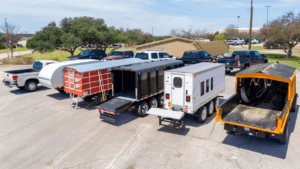

If you’re renting a trailer in Austin, the right choice is the one that matches your cargo, your tow vehicle, and your loading situation. Pick the wrong trailer, and you’ll usually pay twice, once in extra time, then again in stress, unsafe loading, or a last-minute upgrade.
This guide helps you choose between utility, enclosed, car hauler, dump, and tilt deck rentals with a simple decision process you can use in minutes.
Summary
Choose a utility trailer for basic hauling that can be strapped down, an enclosed trailer for weather protection and security, a car hauler for transporting vehicles safely, a dump trailer for debris and heavy bulk loads, and a tilt deck for easier loading of equipment when ramps are risky or clearance is tight.
Key Takeaways
- The best trailer depends on cargo type + weight + how you load, not just size.
- Enclosed is often the safest default for moves, tools, and weather-sensitive items.
- Car haulers are optimized for vehicles and are usually the best choice for transporting a car.
- Dump trailers are for heavy, messy loads you don’t want to unload by hand.
- Tilt decks reduce ramp angle problems and simplify equipment loading.
What Trailer Should You Rent? Use this 60-Second Decision Tree.
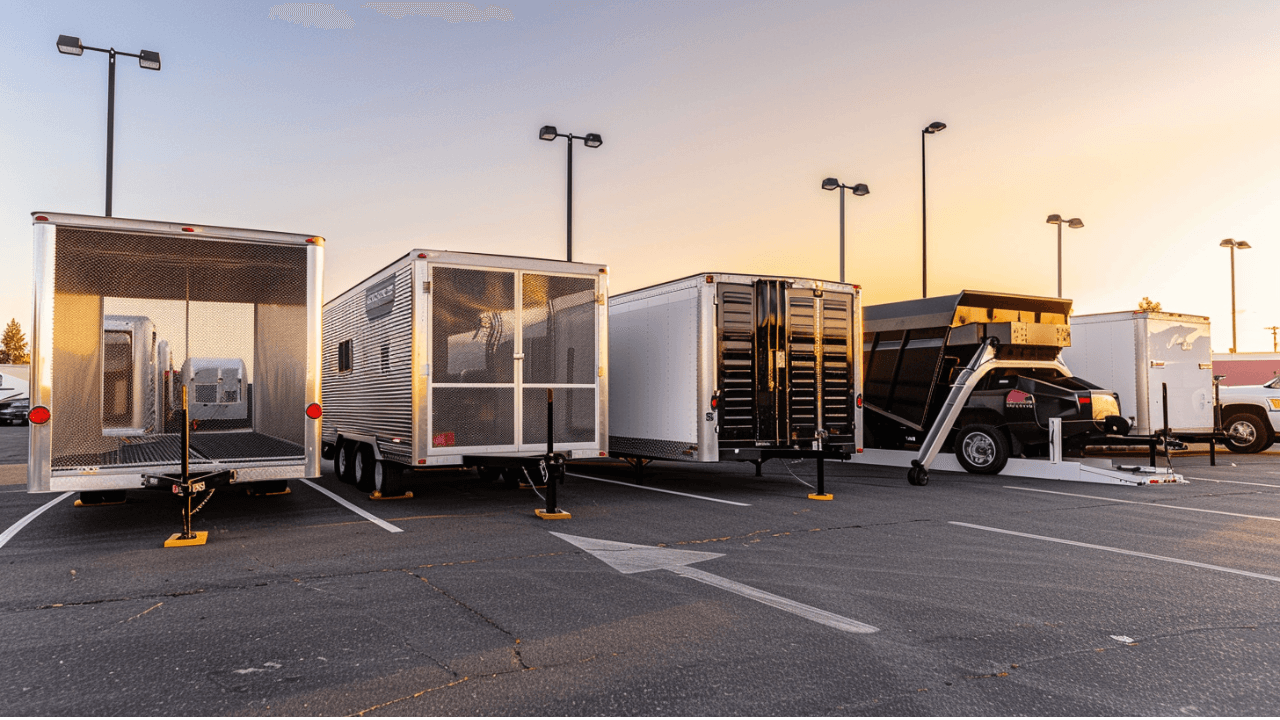
Start here. Answer the questions in order.
- Do you require weather protection or theft protection?
- If yes, rent an enclosed trailer
- If no, go to the next question
- Will you be moving a vehicle?
- If yes, rent a car hauler
- If no, go to the next question
- Will you be hauling debris, brush, dirt, or remodeling waste?
- If yes, rent a dump trailer
- If no, go to the next question
- Will you be lifting equipment with low clearance or heavy tires?
- If yes, rent a tilt deck
- If no, rent a utility trailer.
If you’re still torn, enclosed is often the safest choice because it helps prevent weather issues and reduces theft risk during stops.
Utility Trailer: When is it the Best Choice?
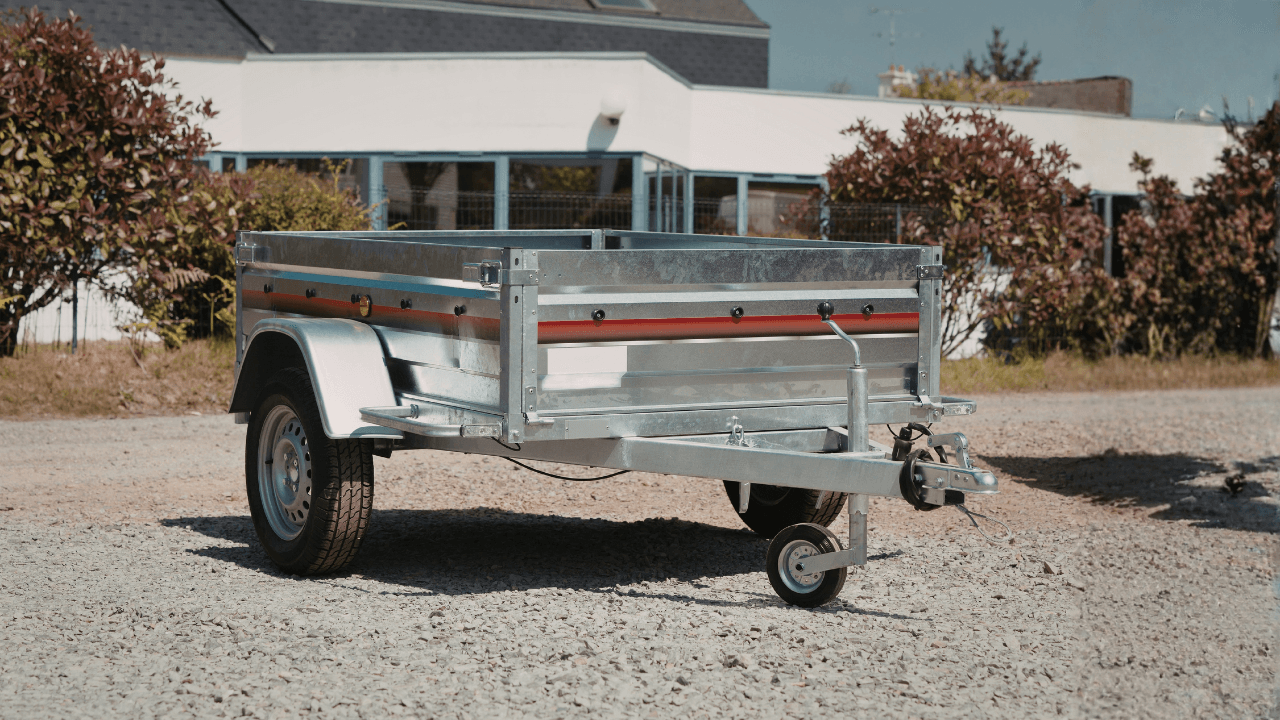
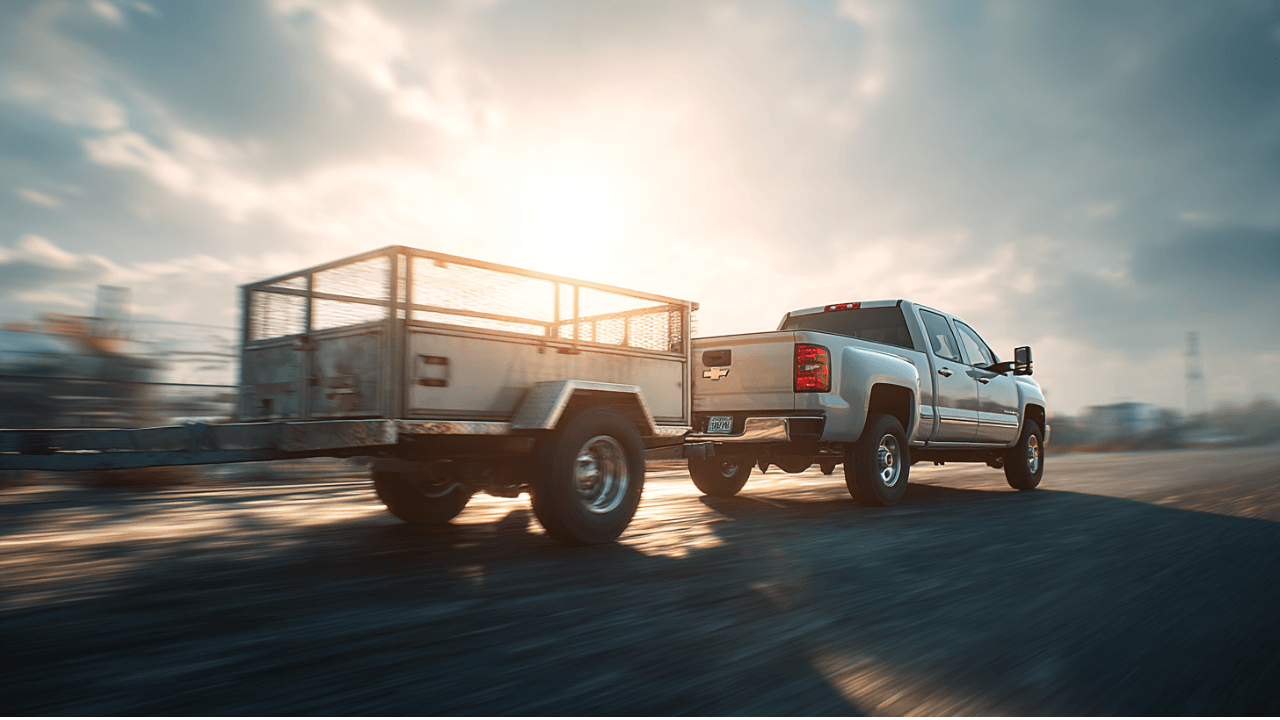
A utility trailer is an open, simple hauler. It works when your load is sturdy, stackable, and easy to strap down.
Best for
- Furniture and appliances for short moves
- Landscaping supplies such as mulch, soil bags, and plants
- Light equipment and tools
- Marketplace pickups that don’t need weather protection
Why utility trailers are popular in Austin
It’s easy, flexible, and typically the lowest-cost trailer type. For quick hauling around Austin, it does the job without extra complexity.
Watch-outs
- Cargo is exposed to rain and road spray
- You need a solid tie-down technique
- Theft risk is higher during stops
If your load would be ruined by one rain shower, you don’t want a utility trailer.
Enclosed Trailer: When Should You Choose It?
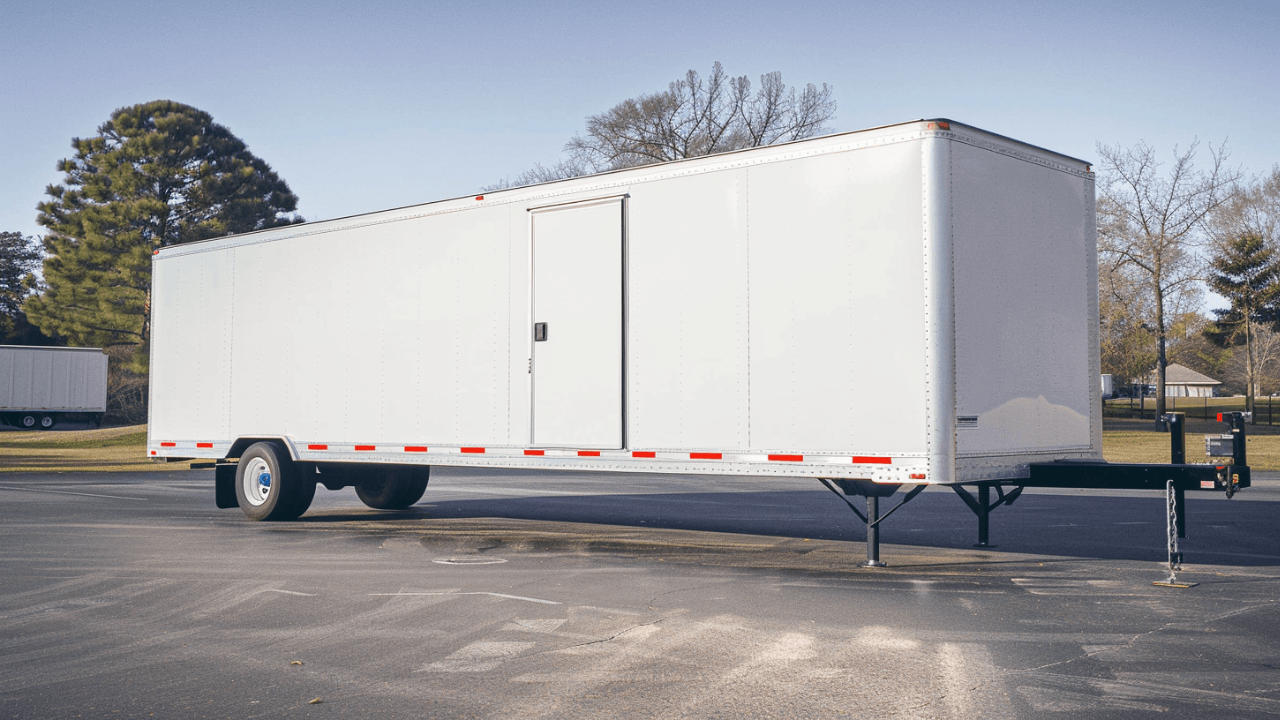
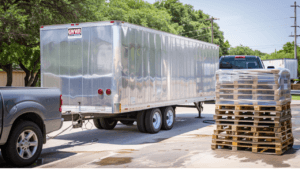
An enclosed cargo trailer is the best pick when protection matters more than easy “toss it in” access.
Best for
- Apartment and house moves
- Tools and high-value items
- Event gear such as pop-ups, catering equipment, and production cases
- Anything weather-sensitive, like electronics, boxed items, and fabric
Why enclosed trailers are often the smarter spend
Even if it costs a bit more than a utility trailer, it can save you from:
- Water damage
- Having to tarp everything
- Theft risk while you’re loading, unloading, or stopping
Watch-outs
- A higher profile means more wind resistance
- Interior dimensions matter (not just trailer length)
- Door opening height can limit bulky items
If you’re moving boxes and furniture, enclosed is usually the easiest way to keep the job predictable.
Car Hauler: When is it Required?
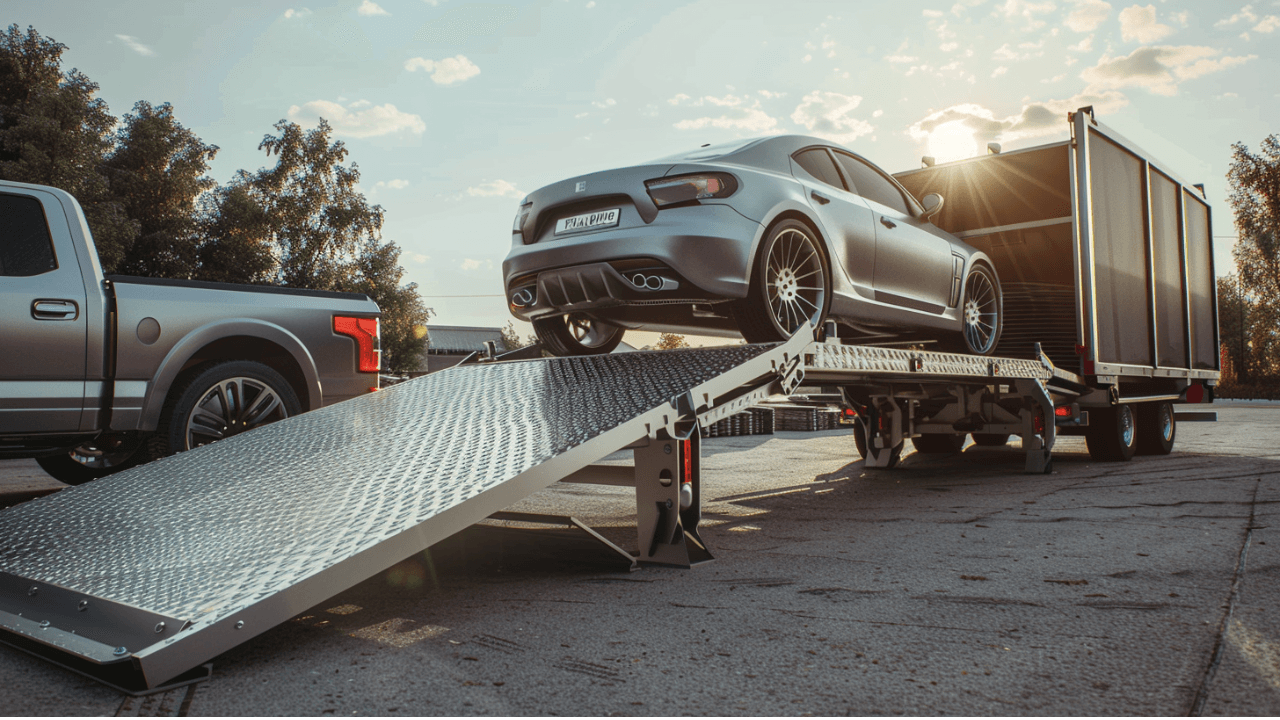
If you’re transporting a car, don’t guess. A car hauler is designed for vehicle loading angle, weight distribution, and securement points.
Best for
- Buying a car from a private seller
- Transporting a project car
- Hauling a vehicle that can’t be driven
- Longer-distance transport where stability matters
Why a car hauler is different
A “strong trailer” is not the same as a car hauler. Car haulers are built around:
- Correct wheel placement
- Ramps that match approach angles
- Tie-down systems meant for vehicles
Watch-outs
- Your tow vehicle must handle the combined weight
- Confirm tie-down expectations before pickup
- Confirm ramp approach clearance for low cars
The FMCSA’s cargo securement rules are federal safety standards meant to prevent loads from shifting or falling, and the same securement fundamentals apply to safe towing for everyday renters.
Dump Trailer: When is it the Best Option?

Dump trailers are for heavy, messy, bulk hauling where unloading by hand is a waste of time.
Best for
- Remodel debris, including drywall, tile, and shingles
- Brush, yard waste, and cleanouts
- Dirt, rock, and bulk materials
- Contractor-style disposal runs
Why dump trailers save time
You load once, haul once, dump once. No shoveling out the trailer by hand, no lifting bags for hours.
Watch-outs
- Dump trailers are heavy even when empty
- Tow requirements can be stricter
- Disposal sites may have rules about load types
If your load is dirty and heavy, a dump trailer is usually the right call.
Tilt Deck: When is it Worth It?

Tilt decks reduce ramp drama. The deck tilts to the ground, so loading equipment is smoother and less risky.
Best for
- Equipment with low clearance
- Wheeled gear that feels sketchy on ramps
- Jobs where you want faster, simpler loading
Why renters like tilt decks
The biggest benefit is the loading angle. You avoid steep ramps and awkward transitions that can cause slips, scrapes, or stalled equipment.
Watch-outs
- You still need a correct balance and securement
- Confirm deck length and weight rating
- Confirm how the tilt mechanism works at pickup
If ramps make you nervous, tilt decks are often the easiest answer.
What Matters More Than Trailer Type: Weight, Tow Rating, and Setup
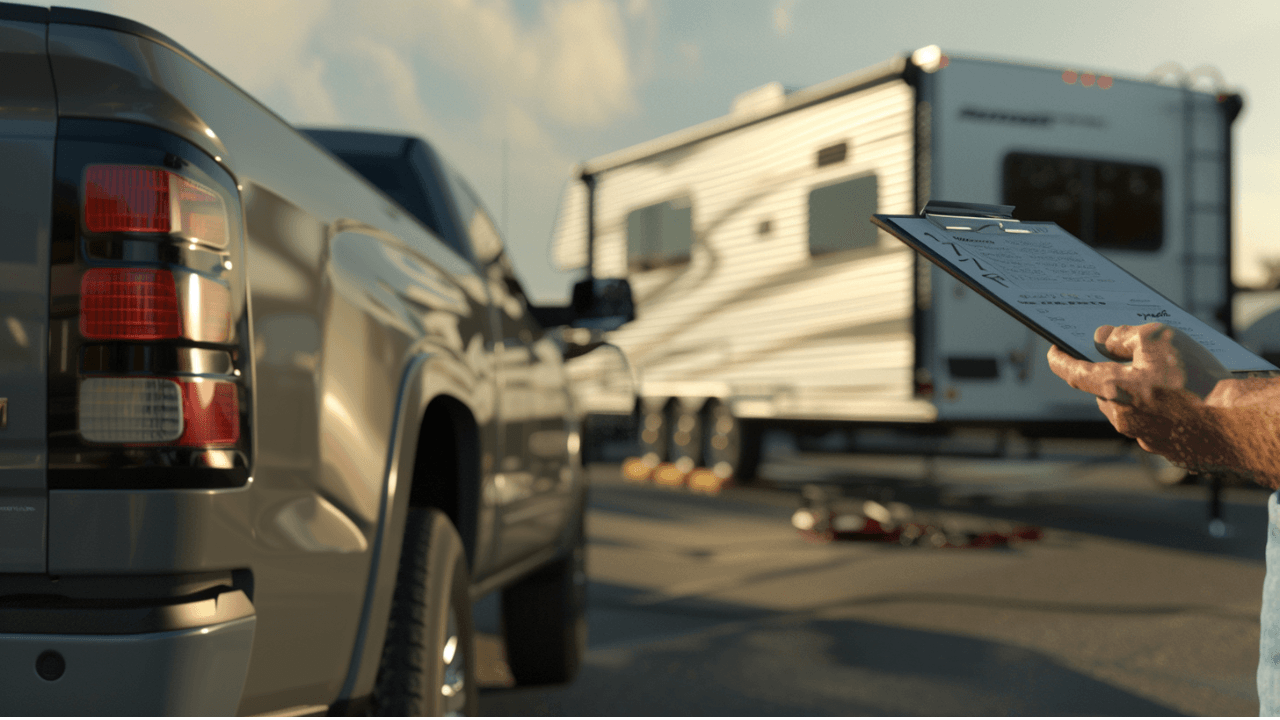
Trailer choice is only half the decision. The other half is making sure your setup is compatible.
Confirm these before you reserve
- Your tow vehicle’s towing capacity
- Hitch receiver class and ball size
- Wiring connection type
- Whether brakes or a brake controller are required
- Your estimated load weight
Towing limits are based on manufacturer ratings like towing capacity and gross combined weight rating (GCWR), which is why your safe capacity depends on the combined weight of the vehicle, trailer, and cargo.
Example Template: Pick the Right Trailer in 5 Minutes
Use this quick fill-in template.
1) What are you hauling?
Items: ______
Most fragile item: ______
Weather-sensitive? Yes / No
Theft risk (tools/equipment)? Yes / No
2) How heavy is it (rough estimate)?
Estimated total weight: ______
3) How will you load it?
Can you use ramps safely? Yes / No
Low clearance equipment? Yes / No
Need a dump function? Yes / No
4) Tow Setup
Vehicle:________
Hitch/Ball Size:________
Wiring Ready: Yes / No
Brake Controller: Yes / No
5) Decision
Weather/Security = YES → Enclosed
Hauling Vehicle = YES → Car Hauler
Debris/Bulk Dump = YES → Dump
Equipment + Ramps Risky = YES → Tilt Deck
Otherwise → Utility
FAQs
What trailer is best for moving in Austin?
Most people do best with an enclosed trailer for moves because it protects from rain, reduces theft risk during stops, and keeps boxes more contained during transport.
What trailer should I rent to haul a car?
Rent a car hauler. It’s designed for vehicle loading angle, wheel placement, and tie-down options that general trailers aren’t optimized for.
Should I choose a dump trailer or a utility trailer for debris?
If your load is heavy and messy, a dump trailer is usually the better choice because unloading is faster and safer. Utility works for light debris if you can unload by hand easily.
Are tilt deck trailers easier than ramp trailers?
Often, yes. Tilt decks reduce steep ramp angles and can simplify loading equipment, especially when clearance is tight.
Checklist: Book the Right Trailer Without Redoing the Job
- Identify your cargo type (move, vehicle, debris, equipment).
- Estimate weight, not just size.
- Choose the trailer type using the decision tree.
- Confirm tow rating, hitch, ball size, and wiring.
- Confirm ramps or tilt loading, based on your comfort level.
- Confirm tie-down expectations for your trailer type.
- Reserve early for weekends and common moving periods.
Not sure which trailer fits your job in Austin? Utility trailers handle general hauling, enclosed trailers protect cargo from weather, dump trailers work best for debris, and tilt decks simplify loading equipment. Reach out to us today with what you’re hauling, and we’ll help match you with the right trailer.